
Custom GPT and AI Assistant Development
General AI tools give general answers. A custom GPT is an AI assistant set up for your organization. It knows your policies, your documents, your terminology, and the way your team works. FutureEdge designs, builds, and supports custom GPTs and AI assistants for schools and businesses in Iowa and across the Midwest.
What is a custom GPT?
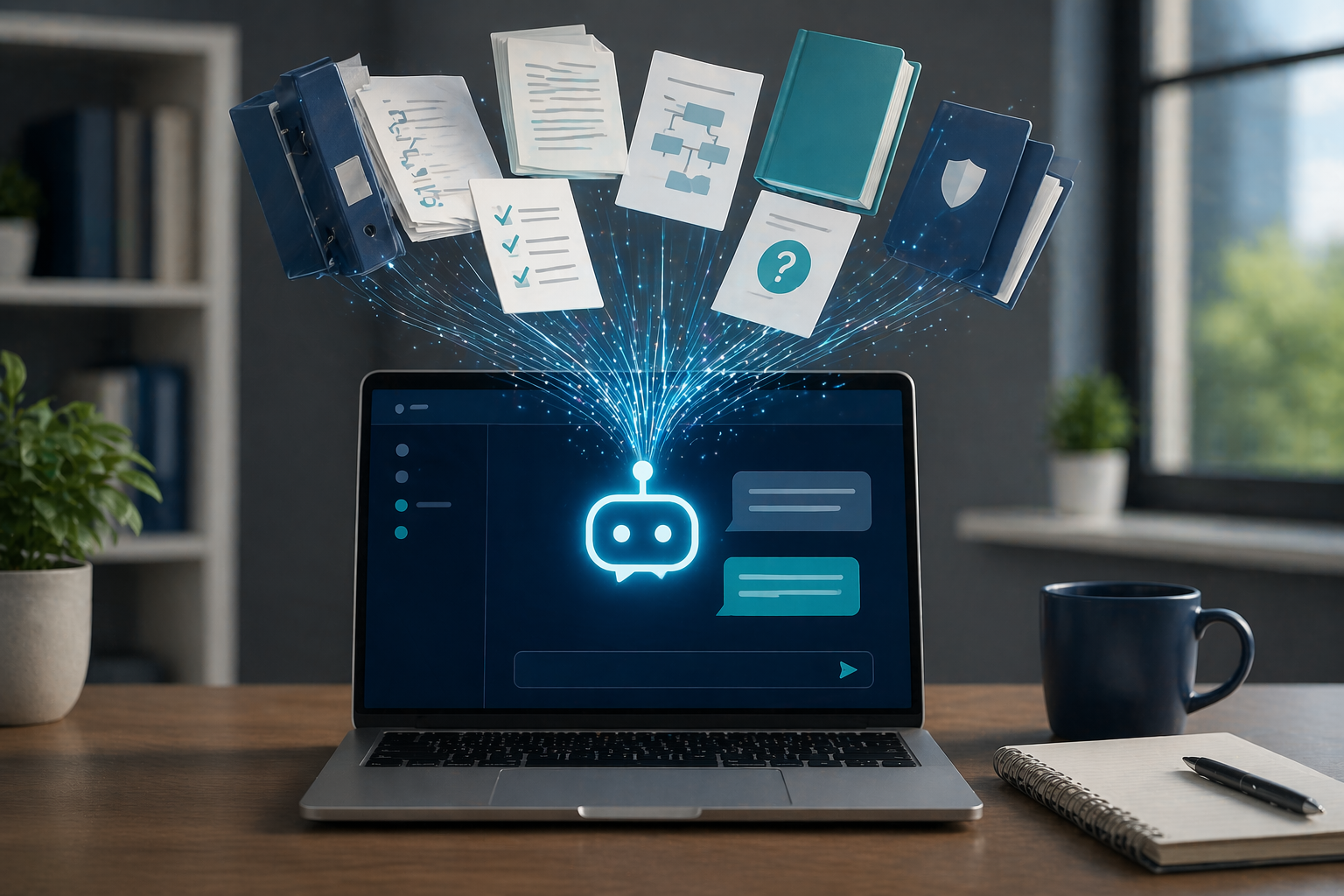
A custom GPT is an AI assistant with instructions, knowledge, and limits designed for one job. Instead of starting every conversation from scratch, your team opens an assistant that already knows your handbook, follows your formatting, and stays on topic. For a longer explanation, read What Is a Custom GPT and Why Should Your Organization Build One?
What organizations build with us
Policy and handbook assistants
Staff ask a question in plain language and get an answer drawn from your handbook or policy manual, with a pointer to the section it came from.
Internal help desks
Answer the questions your office gets every week, such as how to submit a request, where a form lives, and who to contact, so people stop waiting on email.
Parent and customer FAQ assistants
Give families or customers fast, consistent answers about schedules, registration, services, and procedures.
Document drafting assistants
Produce first drafts of letters, proposals, reports, and announcements in your organization's format and voice, ready for a person to review.
Onboarding assistants
Help new employees find answers on their own during their first weeks, without pulling coworkers away from their work.
Research assistants
Gather and summarize information on a topic so your team starts from an organized brief instead of a blank page.
See one in action: Edge A.D. Pro
We built Edge A.D. Pro for Iowa athletic directors. It gives fast answers on IHSAA and IGHSAU policy, eligibility, and transfers, the questions that otherwise mean digging through long rulebooks. It shows what a well-built assistant can do: answer from trusted sources, in plain language, for one specific audience.

Our development process
Needs assessment. We learn the job the assistant will do, who will use it, and what a good answer looks like.
Knowledge preparation. We gather and clean up the documents the assistant will rely on, so it answers from current, accurate information.
Build. We write the instructions, set the limits, and connect the knowledge.
Testing. We test the assistant against real questions before anyone depends on it, and fix what it gets wrong. Read more in AI Evaluations: Test AI Before People Depend on It.
Launch and training. We roll it out to your team and show them how to get the most from it.
Support. As your policies and documents change, we keep the assistant up to date.
Which platform is right for you?
We build on the platform that fits your organization: custom GPTs in ChatGPT, agents in Microsoft Copilot, projects in Claude, or a standalone application when you need more control over data and access. Larger knowledge bases often use retrieval-augmented generation (RAG), which lets the assistant look up the right passage before it answers. We'll recommend an option based on the tools you already pay for and how sensitive your information is. Learn more in RAG: How AI Can Answer Using Your Trusted Information.
Accuracy and security
An assistant is only useful if people can trust it. We limit each assistant to approved sources, design it to say when it doesn't know, and keep people in charge of anything sensitive. For schools, we plan around student privacy requirements from the start.
Frequently asked questions
-
It depends on scope. A focused assistant built on a small set of documents can be ready quickly. Projects with large knowledge bases, integrations, or many users take longer. You’ll get a timeline after the needs assessment.
-
Cost depends on the platform, the amount of material involved, and the level of ongoing support. We provide a clear quote after a free consultation.
-
Any AI can make mistakes. We reduce that risk by limiting the assistant to your approved sources, testing it against real questions, and designing it to say when an answer isn’t in its materials.
-
We choose the platform and settings with your data in mind and explain how each option handles your information before anything is built. Sensitive or protected data gets extra care, or stays out of the tool entirely.
-
Yes. Ongoing support includes updating the assistant’s knowledge so its answers stay current.
Start with a conversation
Tell us the questions your team answers over and over, or the documents they draft every week. We'll show you what an assistant could do.