
AI Agents Are Moving Beyond Chatbots: What Should You Automate First?
Author: Jake Burke, Founder of FutureEdge Consultancy | Johnston, Iowa
Most people first experienced generative AI through a chatbot. They typed a question, received an answer, and decided what to do with it.
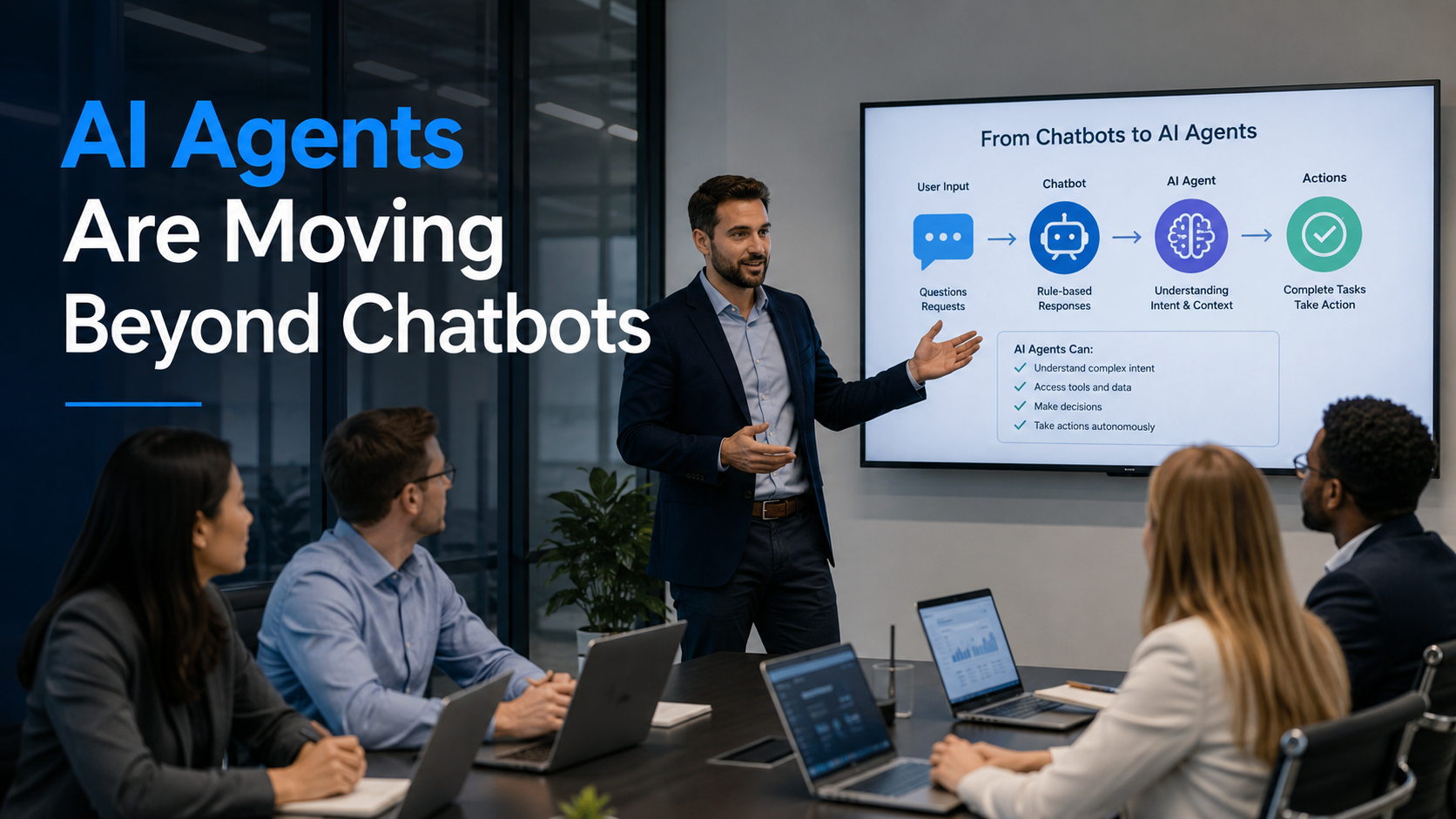
AI agents represent the next stage. Instead of only creating a response, an agent may be able to complete several connected steps, use approved tools, retrieve information, update systems, and prepare work for human review.
That sounds powerful, but it also creates an important question:
What should your organization automate first?
What Is an AI Agent?
A traditional chatbot normally responds to one request at a time. An AI agent is designed to work toward a goal.
For example, an AI assistant might draft a follow-up email after a meeting. An AI agent could potentially review the meeting notes, identify action items, prepare separate messages, update a project tracker, and schedule reminders.
The difference is action.
However, the term “AI agent” is being used loosely. Some products described as agents are simply chatbots connected to one or two automated steps. Organizations should focus less on the label and more on what the system can actually do.
Most Organizations Are Still Early
The 2026 OECD survey of small and medium-sized businesses found that AI adoption is broad but often shallow. Only 5% of surveyed businesses reported using customized AI, while approximately 3.6% reported deploying agentic AI.
That is not necessarily a problem.
Being early does not mean trying the most advanced technology available. It means learning how to use the technology responsibly before it becomes standard.
The safest path is to begin with a narrow workflow that is repetitive, measurable, and easy for a person to review.
Good First Workflows for an AI Agent
Strong starting points may include:
Meeting follow-up: Turning notes into action items, draft emails, and project updates.
Information intake: Sorting routine requests and routing them to the appropriate person.
Document preparation: Gathering information from approved sources and producing a first draft.
Recurring reports: Collecting established data and placing it into a consistent reporting format.
Internal knowledge support: Helping employees locate policies, procedures, forms, or instructions.
These tasks consume time, but they usually do not require an AI system to make a final high-stakes decision.
What Should Not Be Automated First?
Do not begin with a workflow where an inaccurate output could seriously affect a student, employee, customer, or organization.
Examples include final disciplinary decisions, hiring decisions, legal conclusions, employee evaluations, financial approvals, or decisions involving protected personal information.
AI may support parts of these processes, but the system should not independently make the final determination.
Human review becomes more important as the consequences of an error increase.
Start With the Workflow, Not the Tool
A common mistake is purchasing an AI platform and then searching for something it can do.
Reverse that process.
Choose one workflow that currently creates delays or repetitive work. Map each step. Identify where decisions are made. Determine what information is needed. Decide where human approval must remain.
Only then should you select or build the technology.
Deloitte’s 2026 enterprise AI report identifies the AI skills gap as a major barrier to successful integration. This reinforces the importance of training employees and redesigning the work itself, rather than assuming a new tool will solve the problem automatically.
A Simple 30-Day Pilot
A practical AI agent pilot can follow four steps:
Week 1: Document the current workflow and establish a baseline for time, cost, and errors.
Week 2: Build or configure a limited AI-assisted version.
Week 3: Test it with a small group while requiring human review.
Week 4: Compare the results with the original process and decide whether to improve, expand, or discontinue the pilot.
A successful pilot should produce measurable value, not just an impressive demonstration.
The Goal Is Better Work
AI agents will become more common, but organizations should not rush to automate everything.
The goal is to reduce unnecessary work while preserving human judgment, accountability, and trust.
Start small. Measure the results. Keep a person responsible for the outcome.
🔗 Learn about FutureEdge workflow and automation services
Ready to Identify Your First AI Workflow?
FutureEdge helps organizations evaluate repetitive work, select appropriate AI tools, and build systems that employees can use confidently.
